
🔑 Las distintas formas de usar el verbo “Get” en inglés
Aprende a usar el verbo “get” en inglés de forma natural y sencilla, con ejemplos prácticos para entender sus significados más comunes sin hacerte bolas.
Diana Hidalgo y María Eugenia de la Mora Robles
4/25/20262 min read
🔑 Las distintas formas de usar el verbo “Get” en inglés
✨ Si alguna vez sentiste que get significa veinte cosas al mismo tiempo… no estás imaginando cosas.
Sí, este verbo es un pequeño caos con patas. Pero también es uno de los verbos más útiles del inglés.
La buena noticia: no necesitas aprender cien reglas raras para usarlo bien.
Solo necesitas entender sus usos más comunes y verlos en contexto real.
Vamos a poner orden en ese desastre elegante.
1. 📦 Get = obtener, recibir, comprar o conseguir
Este es uno de los usos más básicos de get.
Se usa cuando recibes, consigues o compras algo.
Ejemplos:
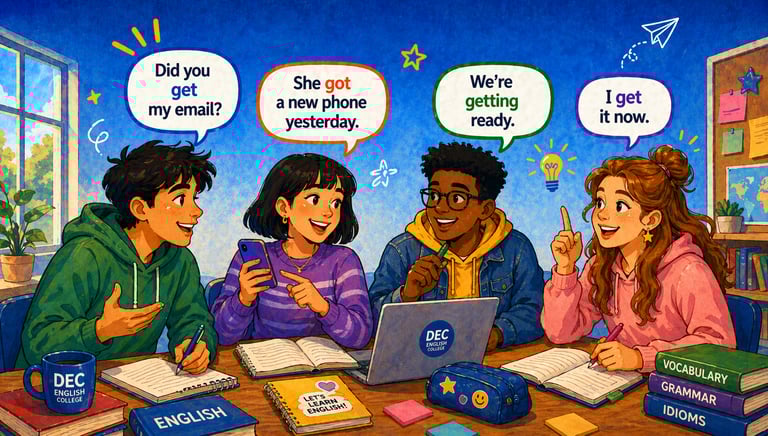
I got a message from my friend.
Recibí un mensaje de mi amigo.She got a new phone yesterday.
Ella consiguió/compró un teléfono nuevo ayer.Did you get my email?
¿Recibiste mi correo?I need to get some milk.
Necesito comprar leche.
Aquí get es súper flexible. A veces es “recibir”, a veces “conseguir”, a veces “comprar”.
Sí, el verbo hace horas extra.
2. 🔄 Get = volverse, ponerse o llegar a un estado
Este uso es clave y aparece muchísimo en conversaciones reales.
Aquí get se usa con adjetivos para hablar de cambios de estado.
Estructura:
get + adjective
Ejemplos:
I get tired after work.
Me canso después del trabajo.He got angry.
Se enojó.We’re getting ready.
Nos estamos alistando.It’s getting cold.
Se está poniendo frío.
Este uso te ayuda muchísimo a sonar natural, porque en inglés se usa todo el tiempo.
Por ejemplo:
get hungry = dar hambre
get nervous = ponerse nervioso
get better = mejorar
get worse = empeorar
Básicamente, get aquí es el rey del “cambio de mood”.
3. 🚕 Get = llegar, subir, bajar o entender según el contexto
Aquí es donde get se pone creativo.
a) Llegar
What time did you get home?
¿A qué hora llegaste a casa?I got to school late.
Llegué tarde a la escuela.
b) Subir o bajar de transporte
Get in = subir a carro/taxi
Get on = subir a bus/train/plane
Get out of = bajar de carro/taxi
Get off = bajar de bus/train/plane
Ejemplos:
Get in the car.
We got on the bus.
She got out of the taxi.
I got off the train.
c) Entender
Sí, get también puede significar entender.
I get it now.
Ya lo entendí.Sorry, I don’t get the joke.
Perdón, no entiendo el chiste.
Y justo ahí uno piensa: “claro, porque este verbo no tenía suficientes trabajos ya”.
🎯 Mini challenge
Completa estas oraciones con una forma correcta de get:
I need to ______ some water.
She got ______ when she heard the news.
What time did you ______ home?
Sorry, I don’t ______ it.
✅ Posibles respuestas:
get
angry / nervous / excited
get
get
🌟 Para quedarte con lo importante
El verbo get puede significar muchas cosas, sí… pero no se trata de memorizar una lista eterna como si fueras a presentar examen contra un villano.
Quédate con estas tres ideas:
get = obtener o recibir
get = ponerse o volverse
get = llegar, subir, bajar o entender
Cuando empiezas a verlo en frases reales, deja de parecer enemigo y se vuelve aliado.
Idiomas
Clases personalizadas y divertidas para todos.
Contacto
Soporte
55 6962 6230
© 2026. All rights reserved.